

Connected-device safety review
SpeakerFree
Review connected technology without turning uncertainty into proof.
SpeakerFree helps people concerned about technology-facilitated monitoring, stalking, or coercive control review their connected devices and accounts. It considers safety context before technical action, identifies devices carefully, and keeps uncertainty visible instead of turning it into conclusions.
Safety note
Looking for help? If you're worried someone may be monitoring your devices, consider reading this on a device they can't access. SpeakerFree's device-specific evaluation is limited to a controlled pilot. For support now, contact the National Domestic Violence Hotline at 1-800-799-7233 or thehotline.org.
- Status
- Live in controlled pilot
- Device catalog
- 17 device families
- Content review
- Independent review not yet complete
- Commercial stage
- Pre-revenue · Available for acquisition
Why it's hard
Acting too quickly can create risk.
An unfamiliar device, account setting, or network entry doesn’t prove someone is being monitored. And changing a shared device or account can be noticed by the other person, which may create new risk. SpeakerFree slows that sequence down. It considers safety context before presenting technical steps, and when the available information isn’t strong enough to support a conclusion, it says so.
Generic security advice typically tells users to factory reset hardware, cycle passwords, or confront anomalies immediately. In shared-housing or post-separation environments, uncoordinated technical action can immediately alert an abusive partner, escalating physical or coercive control before safety alternatives are in place. SpeakerFree treats safety timing as the primary constraint.
Product walkthrough
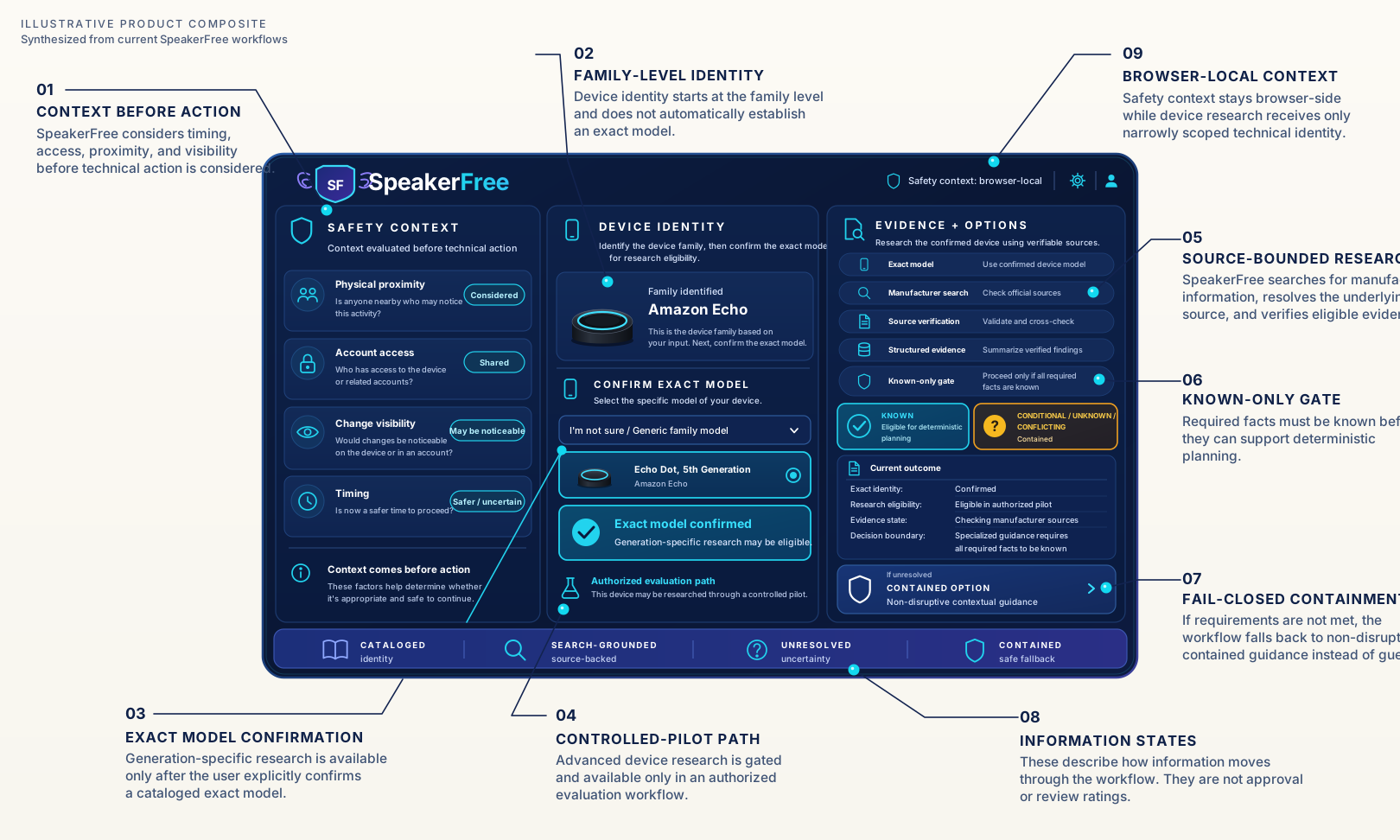
See the safety-gated review workflow in the interface.
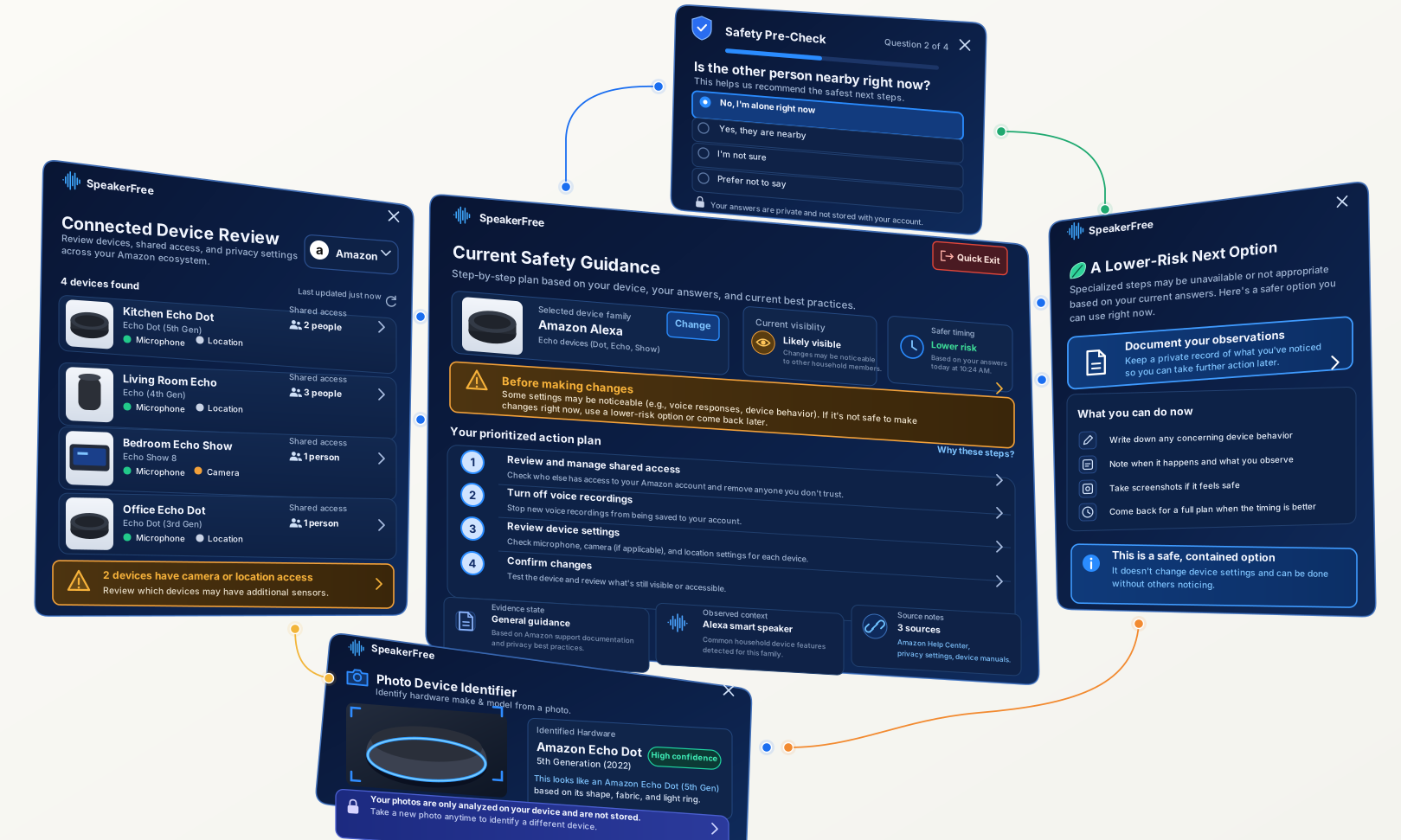
Move from a broad safety review into exact-device identification, bounded observation tools, device guidance, and result paths that keep uncertainty visible.
Authentic application views and workflow diagrams based on the current SpeakerFree workflow. Device-specific guidance depends on the current supported path; contained guidance is used when reliable device-specific instructions are unavailable.
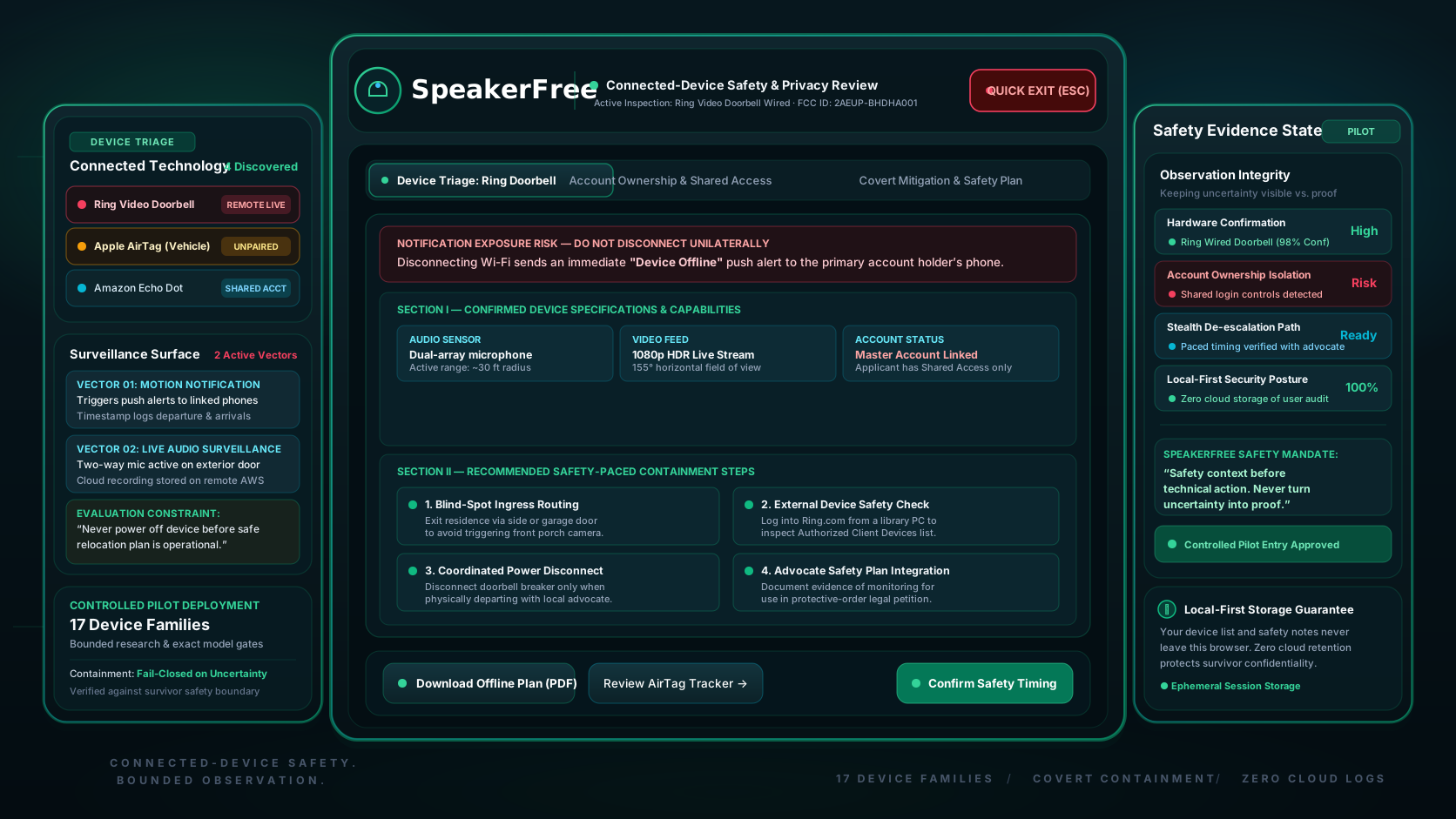
Start with the safety review
The dashboard keeps device categories, evidence status, and possible next steps visible without treating an observation as proof of abuse, stalking, or surveillance.
Annotated dashboard categorizing device priorities and evidence states without premature conclusions.
Workflow
Context first. Identity second. Action only when evidence supports it.
SpeakerFree keeps safety context, device identity, technical information, and possible next steps separate, so one uncertain observation doesn't quietly become a recommendation.
- STAGE // 01
Consider the context
Review whether someone else may have access to the device or account, whether a change could be noticed, and whether now is the right time to continue.
- STAGE // 02
Identify what's being reviewed
Choose a known device or device family, or use a guided inspection tool when the hardware is uncertain.
- STAGE // 03
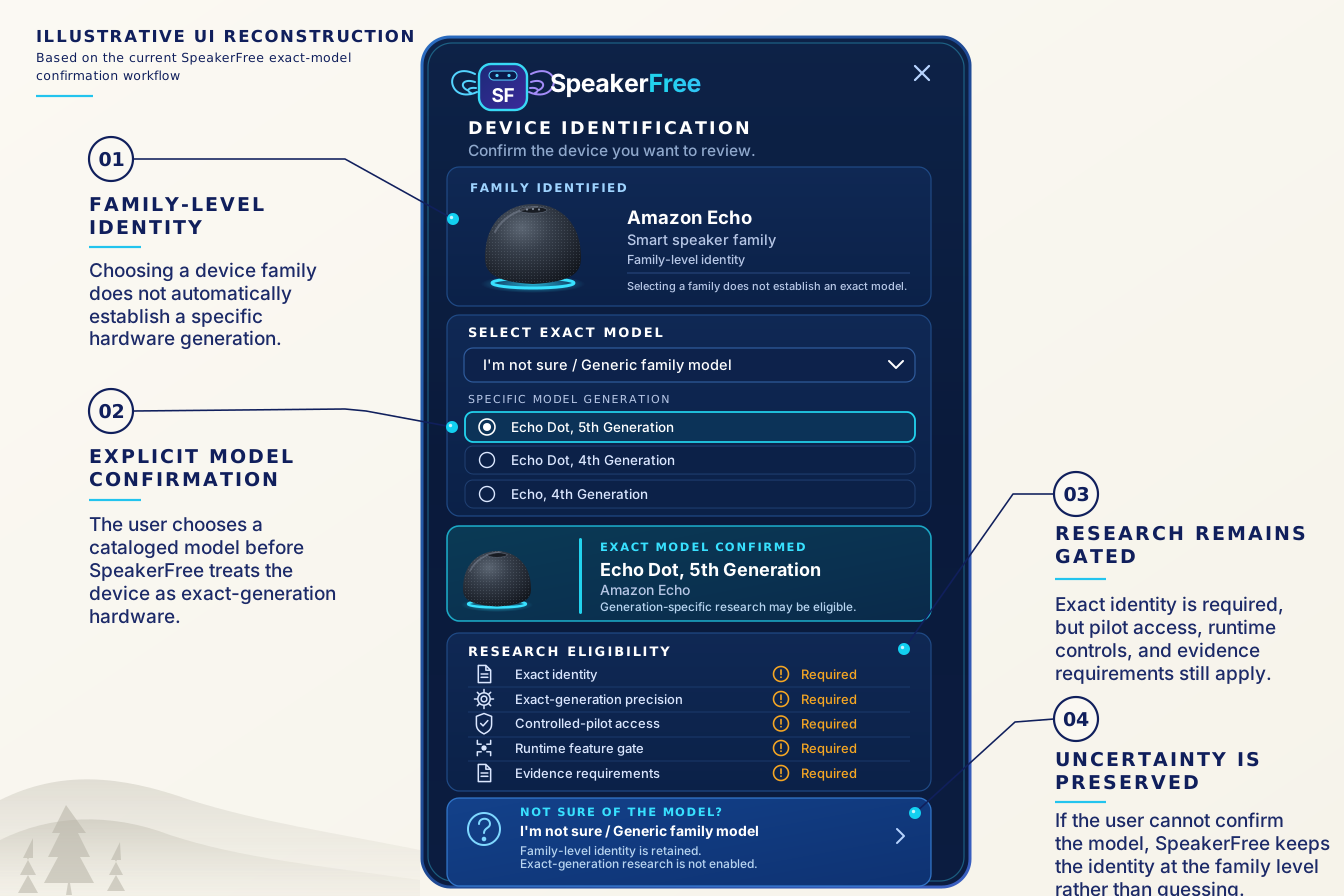
Confirm the exact model when it matters
Model-specific information requires an explicit model choice. A family selection or partial match never quietly becomes a confirmed device.
- STAGE // 04
Review what's known
Stronger technical information is kept distinct from information that's incomplete or unresolved.
- STAGE // 05
Decide what's appropriate now
A step may be offered for review, held until timing or prerequisites are right, or withheld when SpeakerFree doesn't have enough reliable information.
- 01
Consider the context
Review whether someone else may have access to the device or account, whether a change could be noticed, and whether now is the right time to continue.
- 02
Identify what's being reviewed
Choose a known device or device family, or use a guided inspection tool when the hardware is uncertain.
- 03
Confirm the exact model when it matters
Model-specific information requires an explicit model choice. A family selection or partial match never quietly becomes a confirmed device.
- 04
Review what's known
Stronger technical information is kept distinct from information that's incomplete or unresolved.
- 05
Decide what's appropriate now
A step may be offered for review, held until timing or prerequisites are right, or withheld when SpeakerFree doesn't have enough reliable information.

Tools
Different tools for different questions, each with honest limits.
Works without AI or an account
Safety Check & Guided Plan
A short review of shared access, notification concerns, urgency, physical access, and timing comes before any guided plan.
Device Catalog & Exact Model Picker
Start with a device family, then confirm the exact model when model-specific information is needed. If the model is uncertain, SpeakerFree treats it as uncertain.
Bluetooth Signal Scanner
See nearby broadcasting Bluetooth signals and their relative strength, where your browser supports it. It can't tell you whether a signal is a hidden tracker, who owns it, or where it is.
Wi-Fi & Router Inspector
Step-by-step help reviewing information your router already shows, including connected devices and hardware-maker details. SpeakerFree doesn't scan your network.
Smartphone & Account Audit
Structured checklists for reviewing location sharing, account access, active sessions, paired services, and related settings.
Safety Navigator
Topic-based guidance on common safety and privacy questions, built into the app without generative chatbot dependencies.
Quick Exit & Screen Camouflage
Quick Exit immediately covers SpeakerFree and navigates away. Screen Camouflage instantly replaces what's on screen with an ordinary-looking page as a backup. Both reduce immediate exposure, but neither hides every sign that the app was open, and neither can erase browser history, spyware, screenshots, network records, or records held by other services.
AI-assisted, when AI features are enabled
Photo Hardware Identifier
Photograph or upload visible hardware to help identify it. Analysis runs only when you choose to start it, and manual selection is always available. The photo is sent to an external analysis service, so frame it to show only the device.
Bounded Technical Research
Retrieve verified manufacturer documentation and device specifications for confirmed models. Information must pass deterministic gates before admission.
Grounded Safety Synthesis
Synthesizes checked-in guidance and verified sources for specific device configurations, strictly barred from making safety claims or policy decisions.
With an account
Saved Review Workspace
Optionally persist review progress, device inventories, and private documentation across sessions. All data remains client-controlled until explicit save.
Evidence and AI boundaries
AI assists. It doesn't decide what's true.
SpeakerFree keeps survivor context separate from technical tasks that may use an outside analysis service. Safety-check answers and active plan information stay in the browser rather than being stored in a backend profile. When a task does go outside the browser, the request is limited to what that task needs. AI can help identify hardware or gather technical information about a device. It doesn't determine whether surveillance is happening, decide whether a situation is safe, or independently authorize consequential steps. Technical information has to pass application-controlled checks before it can influence a plan. Unresolved information remains unresolved.
- 01
Deterministic core
Plan timing, visibility warnings, exact-model validation, and containment triggers are computed through deterministic rule models rather than generative prediction.
- 02
Bounded AI
AI assists with photo hardware recognition and external manufacturer documentation lookups when explicitly requested. It cannot determine surveillance, make safety decisions, or bypass validation gates.
- 03
Human authority
The person reviewing the device retains total decision authority. SpeakerFree provides transparent technical facts, deferred options, and safety timing context to support deliberate choice.
- 04
Privacy boundary
Safety pre-check answers, device notes, and timing assessments remain in the local browser session. External API requests include only scoped hardware identifiers without user context.
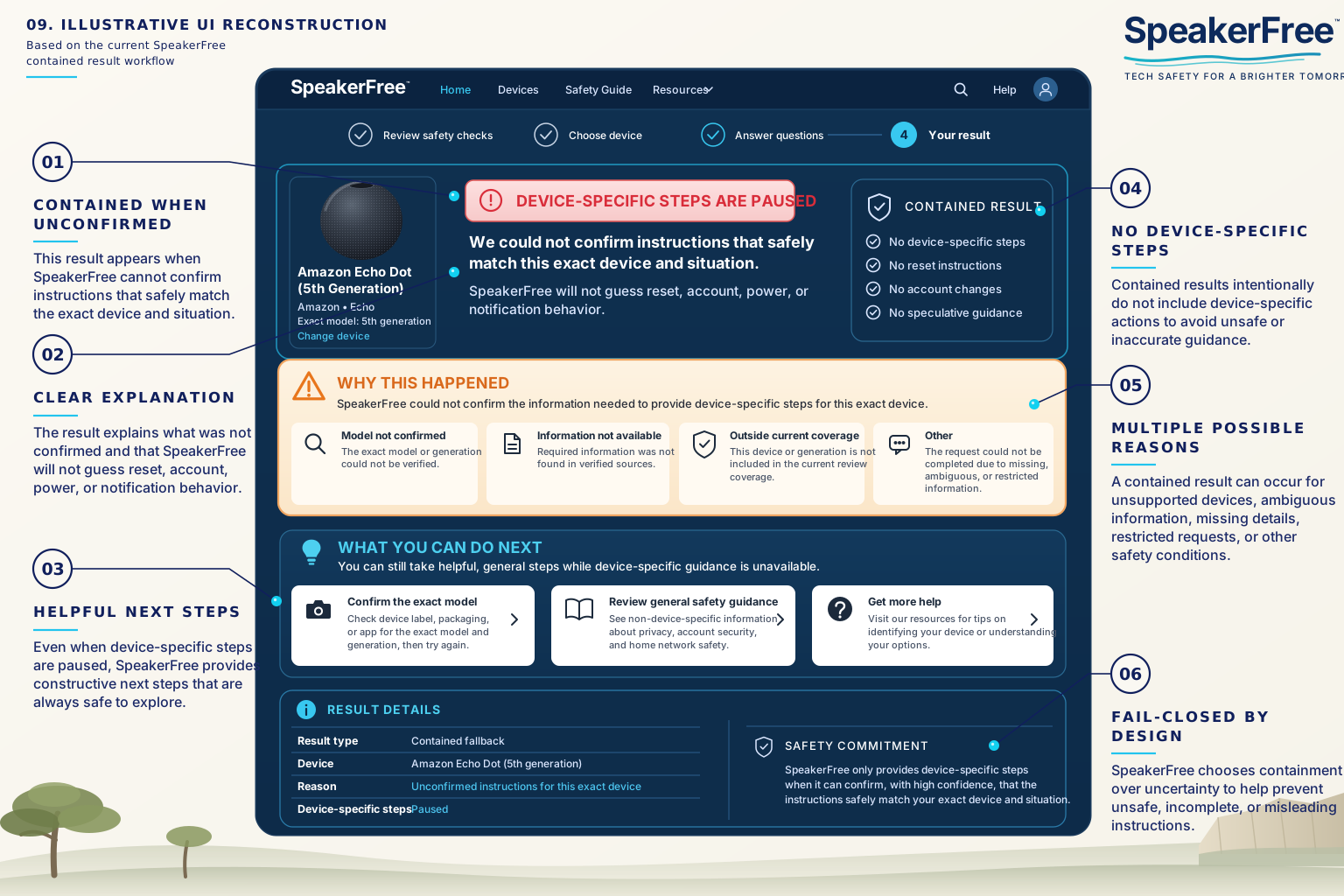
- 05
Fail-closed containment
When device model, manufacturer instructions, or safety timing cannot be confirmed with high confidence, device-specific steps are paused in favor of safe, non-disruptive alternatives.
Safety and decision boundary
From technical observation to a survivor-controlled decision.
The workflow keeps browser-local context, deterministic rules, bounded AI, and human authority strictly separated.
AI & automated assistance versus Human authority
- AI & automated assistance: Analyzes user-submitted hardware photos to suggest candidate device families.Human authority: Verifies physical hardware labels and explicitly confirms exact model generation.
- AI & automated assistance: Researches official manufacturer documentation and technical specifications.Human authority: Determines whether the technical information applies to their physical environment.
- AI & automated assistance: Cannot recommend device modifications, reset sequences, or access revocation.Human authority: Decides if, when, and how to safely proceed based on personal safety timing.
SpeakerFree does not determine whether surveillance or stalking is occurring, and will never guess device instructions when verified data is missing.
Fit
Built for safety-sensitive review. Requires ongoing expert upkeep.
Who uses it
- 01
People concerned about technology-facilitated monitoring or stalking.
- 02
Survivors
reviewing connected technology after separation or in shared living situations.
- 03
Advocates
supporting technology-safety conversations.
- 04
Digital-safety practitioners who want a structured review aid.
Who could acquire it
- 01
Organizations focused on survivor safety, intimate partner violence, and trauma-informed technical assistance.
- 02
Consumer protection, digital privacy, and civil liberties organizations
evaluating smart home ecosystems.
- 03
Cybersecurity and privacy technology companies extending privacy review or safety-sensitive offerings.
- 04
Research institutions and policy labs maintaining device safety taxonomies and abuse-prevention tooling.
These describe intended use and operator fit. They do not indicate current use, endorsement, partnership, or adoption by any organization.
Status
Working software. Content review still open.
SpeakerFree is live in controlled pilot. The current release includes safety-context review, device identification, inspection tools, guided planning, privacy controls, and bounded technical research. Changes are verified through continuous integration, including automated tests, type checking, production builds, safety boundary checks, and browser tests.
The application works, while independent review of its survivor-facing device content is not yet complete. Device-specific evaluation is limited to the pilot until independent trauma-informed and technical review is finalized.
Product & Operational Parameters
SPECIFICATION LEDGER- Application status
- Live in controlled pilot
- Device catalog
- 17 device families
- Independent content review
- Not yet complete
- Verification gate
- CI, automated tests & browser tests
- Release scope
- Public review tools live · Device-specific evaluation is limited to the pilot
- Commercial stage
- Pre-revenue · Available for acquisition
Technical foundation
A multi-tier architecture with browser-local boundaries.
SpeakerFree strictly isolates sensitive user context from external requests. Safety evaluations run entirely client-side. External services receive only normalized device model strings, while evaluation rules and containment decisions execute deterministically in verified application logic.
How the system is separated
SYSTEM PROFILE- 01
Browser-local safety core — Context questions, proximity indicators, account sharing state, and timing risk factors are processed locally and never stored in server-side logs.
- 02
Strict identity hierarchy — Hardware classification separates family-level cards from exact model generations, preventing broad categories from inheriting risky device actions.
- 03
Source-bounded research — Technical information lookups are restricted to verified manufacturer repositories, gated by known-only admission criteria.
- 04
Fail-closed containment — When instructions, models, or timing are unconfirmed, the runtime systematically halts device-specific steps and falls back to safe contextual options.
This is a public architecture summary. Detailed infrastructure, protocol specifications, and security audits are reviewed during controlled diligence.
Proposed transfer scope
Software, safety workflow, structured content, and the context to run them.
Application source code
FULL-STACK TYPESCRIPT LOCAL-FIRST AUDIT APPLICATION
Safety workflow engine
DETECTION LOGIC, HARDWARE RULES, AND FAIL-CLOSED CONTAINMENT
Device & content taxonomy
STRUCTURED HARDWARE REGISTRY, FCC IDS, AND DEVICE SAFETY PROFILES
Inspection & research tools
PHOTO IDENTIFIER, BLUETOOTH SCANNER, AND ROUTER INSPECTOR
AI & containment boundaries
STRICT LOCAL-ONLY BOUNDARIES, FACT GATES, AND RESEARCH CITATIONS
Verification suite & tests
AUTOMATED SECURITY TESTS, BROWSER TOOLING, AND VALIDATION HARNESSES
Operational documentation
SURVIVOR ADVOCACY RUNBOOKS, DEPLOYMENT GUIDES, AND HANDOFF MATERIALS
Proposed transfer scope
Software, safety workflow, structured content, and the context to run them.

Application source code
FULL-STACK TYPESCRIPT LOCAL-FIRST AUDIT APPLICATION
Safety workflow engine
DETECTION LOGIC, HARDWARE RULES, AND FAIL-CLOSED CONTAINMENT
Device & content taxonomy
STRUCTURED HARDWARE REGISTRY, FCC IDS, AND DEVICE SAFETY PROFILES
Inspection & research tools
PHOTO IDENTIFIER, BLUETOOTH SCANNER, AND ROUTER INSPECTOR
AI & containment boundaries
STRICT LOCAL-ONLY BOUNDARIES, FACT GATES, AND RESEARCH CITATIONS
Verification suite & tests
AUTOMATED SECURITY TESTS, BROWSER TOOLING, AND VALIDATION HARNESSES
Operational documentation
SURVIVOR ADVOCACY RUNBOOKS, DEPLOYMENT GUIDES, AND HANDOFF MATERIALS
Proposed Transfer Inventory & Asset Scope
VERIFIED ARTIFACTS- 01Full-stack TypeScript web application (private repository)
Application source code
- 02Safety-context review, guided plan logic, containment behavior, and product rules
Safety workflow engine
- 0317 device families, exact-model identification models, and structured guidance records
Device & content taxonomy
- 04Photo identifier, Bluetooth scanner, router inspector, and account checklists
Inspection & research tools
- 05Automated test suite, boundary regression tests, and deployment configuration
Verification & CI assets
- 06Architecture specs, maintenance runbooks, trauma-informed guidelines, and diligence materials
Documentation & transition
A transaction defines which project assets are included, including maintained source, original structured content, design systems, documentation, and transition support. Third-party brand names, trademarks, and documentation belong to their respective owners. Offered by Prosocial Coding LLC. Page last updated September 2026.
Questions
Frequently asked questions
01Why is device-specific evaluation limited to a pilot?
SpeakerFree's device-specific guidance has not completed independent review. Until trauma-informed and technical review is complete, device-specific evaluations remain within the controlled pilot.
02What would broader availability require?
Broader device-specific access requires independent trauma-informed and technical review of guidance, resolution of open evidence questions, documented sign-off, and an operational process for maintaining content as devices evolve.
03What does the acquisition review process involve?
It begins with an alignment conversation regarding your organization and operating capacity. Qualified parties may proceed to private product walkthroughs, architecture diligence, transfer-scope review, and transition planning under appropriate confidentiality terms.


Next steps
Interested in SpeakerFree?
SpeakerFree is available for acquisition as a pre-revenue software project and safety-workflow package. A comprehensive evaluation examines both the technical architecture and the operational capacity needed for trauma-informed maintenance. Start with an introductory conversation.
Staged Review & Diligence Path
ENGAGEMENT SEQUENCE- 01
Software codebase and safety workflow asset acquisition
- 02
Controlled technical diligence and architecture review
- 03
Private product walkthrough and safety model inspection
- 04
Transition and deployment support packages
All inquiries are routed through the canonical contact route for qualification, seller review, and staged diligence access.